
When to Go Home After a Canadian Refusal and Return Refreshed
By: Norilyn Oligo-Sarma RCIC
A refusal can feel like the end of the road, especially when it comes after a restoration application. You may have stayed hopeful, gathered documents, waited for a decision, and then received the letter no one wants to see. At that point, the hardest question is often practical and emotional at the same time: Is it time to go home, or should I keep fighting from inside Canada?
For many people, going home is not giving up. It can be a smart way to protect the future, reduce immigration risk, reconnect with family, and return with a clearer plan. The goal is not only to leave Canada. The goal is to leave in a way that helps the next application, rather than making the situation worse.
This post is for general information only. Canadian immigration decisions depend on the facts of each case, and anyone facing a refusal should get advice from a qualified immigration professional before acting.

A refusal after restoration changes the situation
Restoration is usually used when a temporary resident in Canada has lost status and asks Immigration, Refugees and Citizenship Canada to restore it. This can apply to visitors, students, or workers, depending on the situation.
When restoration is refused, the person no longer has the protection of a pending restoration request. That creates a serious problem. Remaining in Canada without status can affect future applications, especially if the person continues to study, work, or stay for a long time without authorization.
This is why the timing matters.
A refusal does not always mean a person is banned from Canada forever. It does mean the file now carries a negative history that must be handled carefully. The next steps should show judgment, respect for Canadian immigration rules, and a real plan.
That is where going home can help.
Leaving Canada after a refusal can show that the person understood the decision and took action to correct the situation. It may also reduce the period of unauthorized stay. In some cases, it gives the person space to prepare a stronger application from outside Canada.
The key is not to leave in panic. The key is to leave with a record, a plan, and a clear understanding of what happened.
When going home may be the better choice
There are times when staying in Canada after a refusal can create more harm than good. People often stay because they are afraid that leaving means they will never come back. That fear is understandable, but it can lead to rushed choices.
Going home may be the better option when the refusal shows that the current strategy has failed and there is no lawful status left to rely on.
For example, it may be time to leave when:
The restoration application has been refused.
There is no valid visitor record, study permit, or work permit.
The person has no realistic application ready to submit from inside Canada.
The refusal reasons require stronger evidence from the home country.
Continuing to stay could make the immigration history look worse.
The person needs family support, rest, and time to think clearly.
A person who has just received a refusal may feel pressure to “do something” right away. That pressure can lead to weak reapplications, incomplete documents, or explanations that do not answer the officer’s concerns.
A short pause can be powerful. Going home allows a person to collect new documents, rebuild financial proof, explain ties to the home country, and prepare a better return plan.
It also allows the person to reset emotionally.
Immigration stress is real. People spend months worrying about status, money, rent, school, work, and family expectations. After a refusal, the mind may not be sharp enough to make good decisions. Seeing family back home, resting, and reviewing the case with a calm mind can help.
Going home can be part of the strategy, not the end of the dream.
How leaving can help mitigate the case
Mitigation means reducing the negative effect of a problem. In an immigration context, it often means showing that the person took responsible steps after something went wrong.
A refusal after restoration is a negative event. The question then becomes: what did the person do after receiving it?
Leaving Canada within a reasonable time may help show good faith. It can support the argument that the person did not intend to ignore immigration rules. It may also help separate the past problem from the future application.
This does not erase the refusal. It does not guarantee approval later. But it can help shape the story.
A stronger future explanation may look like this:
“After my restoration application was refused, I left Canada and returned to my home country. I respected the decision, reconnected with my family, reviewed the reasons for refusal, and prepared a new application with stronger documents.”
That is clearer than staying without status for months and later trying to explain why.
A person can also use the time back home to gather documents that are often harder to collect while in Canada, such as:
Updated employment letters
Family records
Property documents
Business documents
Bank statements from local accounts
Tax records
School records
Evidence of family responsibilities
A clear travel history timeline
The next application should not simply repeat the refused one. It should answer the refusal directly. If the officer questioned financial support, show better proof of funds. If the officer questioned purpose of visit, provide a clearer plan. If the concern was weak home ties, show what connects the person to the home country.
Leaving Canada can also help support the idea that the person is willing to comply with temporary resident rules. That matters for visitors, students, and workers, because temporary status generally requires proof that the person will leave Canada when required.
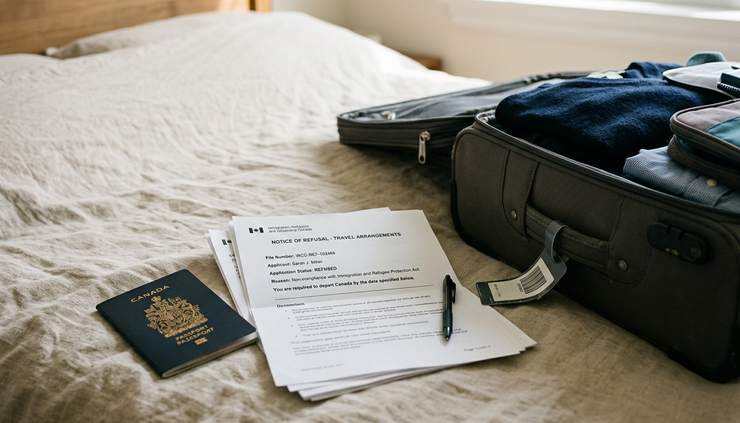
Returning to Canada after going home
Many people ask the same question after a refusal: Can I still come back to Canada?
In many situations, the answer may be yes, but it depends on the full history and the strength of the new application. A previous refusal does not automatically prevent a future approval. Canada looks at the new application, the past record, and whether the concerns have been answered.
The return plan should be honest and well prepared. It should not hide the refusal. It should not pretend nothing happened. Officers can see past applications and decisions. A better approach is to acknowledge the history and explain it clearly.
A strong return plan usually includes three things.
A clear reason for coming back
The person should explain why they want to return to Canada now. The reason must match the type of application.
For a visitor, the plan may involve family visits, tourism, or attending a specific event. For a student, the plan should connect the program to past education and future goals. For a worker, the application must match the job offer and permit category.
A vague reason is weak. “I want to return to Canada for a better life” may sound sincere, but it may not satisfy temporary resident rules. The purpose should be specific and supported by documents.
Stronger proof than before
The next application should improve the weak points from the refusal. If the refused file had missing documents, unclear explanations, weak finances, or inconsistent timelines, those issues need to be fixed.
A useful way to review the case is to make a simple comparison.
Refusal concern | Better response in the next application |
Weak financial proof | Updated bank records, income proof, sponsor documents, and a clear budget |
Unclear purpose of travel | A detailed travel, study, or work plan with supporting documents |
Weak home ties | Employment, family, property, business, or school evidence |
Long stay in Canada | Honest timeline, proof of departure, and clear explanation |
Previous restoration refusal | Direct explanation and proof of compliance after refusal |
This kind of review keeps the new application focused. It also helps avoid emotional writing that does not answer the officer’s concerns.
Evidence that the person left properly
If a person leaves Canada after refusal, they should keep proof of departure and arrival. This may include boarding passes, travel tickets, passport stamps where available, and records showing arrival in the home country.
These documents can help explain the timeline later. They show when the person left, where they went, and how they responded after the refusal.
The timeline matters. If there was a gap between the refusal and the departure, prepare a truthful explanation. For example, the person may have needed time to book a flight, close housing arrangements, collect belongings, or manage personal matters.
Truth is better than over-explaining. A clear, calm timeline is often stronger than a long emotional letter.
The emotional value of going home
Immigration discussions often focus only on paperwork, but people are not files. A refusal can affect confidence, sleep, relationships, and health. It can make someone feel embarrassed, especially if family and friends expected success.
Going home can help repair that.
Family support can bring perspective. A person may realize that the refusal is painful, but survivable. They may also remember why they wanted Canada in the first place, and whether the next attempt is still the right choice.
Being home can also help a person prepare for the next round with more strength. They can organize documents without fear of daily status pressure. They can save money. They can seek proper advice. They can decide whether to apply again, choose another pathway, or wait until the circumstances are stronger.
This is what it means to return refreshed.
A refreshed return is not just physical. It means coming back with:
A cleaner timeline
Better documents
A stronger explanation
More emotional balance
Family support
A practical plan
A person who leaves Canada after a refusal and later applies again should show maturity in the application. The message should be simple: the person faced a setback, respected the process, corrected the weak points, and now seeks entry for a clear and lawful purpose.
That kind of story is stronger than panic, denial, or silence.
How to decide before you leave
Before booking a ticket, take time to review the situation carefully. A refusal can have different consequences depending on the type of application, the person’s current status, and whether any enforcement issue exists.
The decision should include both immigration and personal factors.
Ask these questions:
What exactly does the refusal letter say?
Was restoration refused, or was another application refused?
Do I still have any valid status in Canada?
Have I worked or studied without authorization?
Is there any deadline or enforcement concern?
Can I make a strong application from inside Canada?
Would leaving reduce future risk?
What documents can I collect from home?
Do I have enough support to prepare properly?
If the answers show that there is no lawful status and no strong immediate option, leaving may be the cleaner path. It may protect future credibility and give the person time to rebuild.
Before leaving, it is wise to keep copies of everything:
Refusal letters
Previous applications
Payment receipts
Immigration forms
Correspondence with immigration
Travel records
School, work, or visitor documents
Any legal advice received
Keep digital copies and printed copies if possible. These records may be needed for the next application.
Also avoid common mistakes after refusal. Do not ignore the refusal letter. Do not submit a rushed application with the same weak documents. Do not work or study without authorization. Do not hide the refusal in a future application. Do not assume that leaving Canada automatically fixes everything.
Leaving helps most when it is paired with honesty and preparation.
A return is possible when the next case is stronger
A Canadian refusal is painful, but it does not have to define the whole journey. For many people, the better move after a failed restoration is to go home, see family, rest, and prepare for the next step with a clear head.
The goal is to reduce damage, not act out of fear. If staying in Canada without status creates more risk, leaving can show respect for the rules. If the refused application was weak, time at home can help build a better one. If the person is tired and overwhelmed, family support can bring back the strength needed to try again.
The best next application should not say, “Please approve me because I was refused before.” It should say, through evidence and honesty, “I understood the refusal, I complied, I improved my case, and I now have a clear reason to return.”
That is the real meaning of going home refreshed.


Comments